Pages

Showing posts with label Travel. Show all posts

Sunday, 22 October 2017

Nepal Diaries


In the last six months, a variety of people – from immediate family to passing acquaintances, and everyone in between – have expressed surprise at my fondness for Chennai. After all, it’s perennially hot, impossibly conservative and unapologetically brusque. I quite agree with this assessment, though some of my love stems from this exact brusqueness, its almost boring laidback-ness (which I unfortunately relate to) and its ability to not give a fuck (a quality I aspire to cultivate). More importantly, by virtue of being the first place I have been forced to navigate on my own, as a legitimate adult, it has helped me understand and actually like the person I am (ignoring sporadic bouts of self-loathing which really, should count as a personality trait, just like introversion or morbid curiosity). 

The only other times, I have had such crash courses in self-awareness are when I have travelled for work. In Bhutan I learnt that I revelled in my own company and that professional competence was a turn on. In Maldives I learnt that I liked Bhutan better, Kit Kat ice cream existed and that men mansplain. And in Nepal? In Nepal I learnt that Khukhri rum was my poison of choice, that I will forever and ever be a sucker for Thai curry, and that I’m probably in consulting for good. But let me back up a bit and start from the beginning.

9 October, Monday: I land in Kolkata, the City of Joy or as I like to describe it, the City Where People Do You a Favour by Showing Up for their Jobs. It is raining, so naturally we wait for a little less than an hour for the Uber to arrive. Our hotel is a bit of a shock – apparently, the staff are self-appointed upholders of the morality of their guests, who are actively discouraged to stay out past 10 pm. A belated perusal of online reviews reveal that couples have had to produce marriage certificates to be able to avail of their booking, and standard rooms cannot be latched from inside. I stack room furniture and luggage against the door to block out illicit entry and sleep with a pair of scissors under my pillow – my Delhi Person ParanoiaTM is in full force. My laptop also has trouble starting up, so I use my innate technological skills of switching the device on and off while plugged in/ without battery and other permutations and combinations.

10 October, Tuesday: My laptop refuses to start up at the Kolkata airport. I sound the alarm to my boss and he offers to drop a mail to our local partners to see if they can spare me a device (Spoiler alert: they cannot).

We land at Kathmandu where a rickety Air India bus awaits us on de-boarding, to ferry us to the airport building. The immigration staff don’t look up as they stamp our passports, a contrast to the personnel in India who wanted to know everything about Indian passport holders in front of them, from reason of travel to their second cousin’s gotra, before letting us out. The traffic situation in Kathmandu is mad and we reach the hotel only late in the evening. It is in Thamel, a glitzy tourist hub – think of it as a love-child of Paharganj and Hauz Khaz Village.

In the hotel room, I exhort deities I don’t believe in, to allow my laptop to switch on. They listen. The land of Pashupatinath has made me an overnight convert.

11 October, Wednesday: We begin our interviews with government officials in Nepal, aka the ritual where we drink black tea five times a day.

12 -13 October, Thursday & Friday: We begin to train a group of 20 enumerators on a questionnaire we have approximately zero faith in. I start with rusty Hindi (blame Chennai for that) which gets better as the training progresses. Soon I’m dealing with words like yogdaan and uttardaata.

Lunch on both days is a plate of momos - chicken the first day, and an unidentified meat on the second day. For the sake of my mother’s peace of mind, I hope that was pork.

14 October, Saturday: Finally, a semi-break day. The morning begins with us betraying our hotel (with mostly nice, sometimes stoned staff) to shift to another one down the road. We pretend we are moving to a colleague’s home, whose location we are repeatedly unable to recall. The manager and his underling are adequately suspicious. The gods are also upset at our treachery, and retribution arrives in the form of dysfunctional cards and under-renovation ATMs.

Our local expert meets us for an early dinner (at a restaurant called Tabela, where a live band belts out Dum Maaro Dum, in response to a drunken request by one of the diners) and asks us, regular as clockwork, if we have done any sightseeing. We haven’t, and feel guilt ridden. We are determined to change this as he drops us back at Thamel. Our first stop in exploring Nepalese tourism and culture? A local dance bar.

Thamel is littered with these – about two in every street. Each is named with appropriate disregard for creativity. The one we visit is called Nasha Bar. There is a Bebo Bar as well with Kareena Kapoor’s face on the hoarding (which was better than the inexplicable night suit – wearing, mid-riff baring cardboard cut-outs at other places), as well as a Teenage bar (which we steer clear of, unsure whether the name referred to the age of the dancers or the clientele).
The lighting is expectedly lurid in Nasha Bar and the patronage exclusively male. The middle aged dominate, though there are a couple of bespectacled college kids as well, seated on red leather sofas arranged around a raised platform. The dancers are scantily dressed, wearing high heels and garish make-up. Calling them dancers is also a bit of a stretch, because their primary duty is to sashay down the stage to the beats of Hindi film music, strategically revealing skin. They are hospitable though, ushering us into comfortable seats (that is with no other men on our sofa, and located a little way off from the stage/ platform). I constantly feel like a prude, the 15 odd minutes we are there. We order nothing, and leave without being bothered.

Afterwards, we discover other bylanes of Thamel, where pubs and restaurants cater to tourists and locals, till late hours. I am introduced to the joys of Cuba Libre (using local rum), though I also covet the mojito my colleague orders.

15 October, Sunday: A day where I question my professional competence and learn that success as a consultant will require faking personal charm. I’m surprised that I’m determined to try at any rate, though that night, I drown my sorrow in a fancy dinner at the stunning Garden of Dreams. It’s an erstwhile royal garden, which manages to keep Kathmandu’s dust and pollution out by constructing mile high walls. It reminds me of Delhi, where we keep eyesores like poverty out by covering slums with hoardings and curtains.

16 – 18 October, Monday to Wednesday: More interviews, more sweetened black tea, and some more sight-seeing. We venture out to Durbar Square, which has been ravaged by the earth-quake.  Suddenly, the local insistence that we see things beyond the office and our hotel room, seems clearer.

I also wonder at the use of old Hindi film songs to Adam/ Eve tease in the sub-continent. It was Husn hai Suhana in Bhutan. Sawali Saloni in Nepal. Still better than the kissy sounds I heard yesterday in Chennai.

On Wednesday night (our last night in Nepal), I eat the best Thai curry ever (even better than Benjarong’s). I also make a long overdue entry into adulthood by finally appreciating pub culture. More khukhri rum and coke is had, and elderly creeps repulsed by adopting an attitude of blatant rudeness. Cops are asked for directions, who drunkenly sing it back to us. Cycle rickshaw wallahs want to be paid 200 rupees for making a quarter kilometre ride. As always, Google Maps save the day.

19 October, Thursday: The day of our return, though not before a quick trip to Pashupatinath in the morning. It’s one of the more interesting temples I remember seeing (and I have seen lots), with a giant Nandi covering the entry of the temples from the eyes of non-Hindus (who have to return from the gate – so much for our famed tolerance).

20 October, Friday: After another eventful 24-hour layover in Kolkata, I’m back in my flat in Chennai. It’s the first time in seven months, but I finally feel at home.

Friday, 14 November 2014

What I Learnt in the Month Gone By


The answer to the burning question of what I like better- mountains or the sea.


Bhutan-Relaxing after a morning walk


Maldives-Sneaking out for a mid afternoon break

Mountains FYI. Hands down.


A young person's love life is everybody's business.
I got asked by a thirty something globetrotting professional woman whether I wasn't getting too old for marriage. And whether my parents were not introducing me to suitable bachelors.


It's probably not love if a muffin can help get over heartbreak.


I don't hate dogs. Not a lot.
I shocked myself by going 'Awwww what a cute doggie' at a random stray in Bhutan. Also, fun fact: there are no dogs in the Maldives. Not one. (Maybe not such a fun fact for dogs).


I enjoy teaching.
Or having a captive audience, at any rate.


Adam-teasing is a thing.
A shop girl would break into a Hindi film song every time a male colleague would visit. One of those times, the song was 'Husn hai suhana, paas mere aana' (yes that forgotten gem from Coolie No. 1).


Unnecessary beautification is not just something CWG obsessed Indian administrators do.

Ghastly ornamentation in Bhutan

Still better than this:

Ghastly ornamentation in Delhi

Young lovers the world over desecrate public property.

See, just the names change

Indians are world famous for circumventing queues and bending rules. And being unapologetic about it. Even in the emergency ward of a government hospital named after a former Indian Prime Minister.


All the hoopla about 'Ghar ka Khana' is justified.
You can have all the fish maru, grilled tuna with salsa, Kerala style fish curry, Bengali restaurant style fish curry in the world. But your mom's homemade curry that spills from one end of the plate to another is still the best.(Now if only the moong ki daal and the daily bhindi could be avoided).


I am more Bengali than I get credit for.
It's not just about the food. I have rarely heard a Bengali say, 'Valentine's day is an import from the decadent West'. It's more common to hear them say that we have Saraswati Puja for that anyway.


A Uniform Civil Code is not a necessary (and certainly not a sufficient) condition for women's empowerment. The senior management of the Central Bank in Islamic Maldives is all-women.


There's a pleasure in the world called Kit Kat ice cream.
There can be no reasonable justification for this being denied to an average person in post-reform India.

They are not paying me for this, I swear

Thursday, 24 April 2014

Countdown to Blog B'day-Day 3

Since it's my blog's second birthday this week (26 April 2014), I have decided to blog every day up to it. However short. However frivolous (which of course goes without saying).

Read about Day 4Day 5 and Day 6 here.

This is probably cheating.
But don't tell me you would rather read a hastily written post than feast your eyes on these:


Because every trip begins at the airport

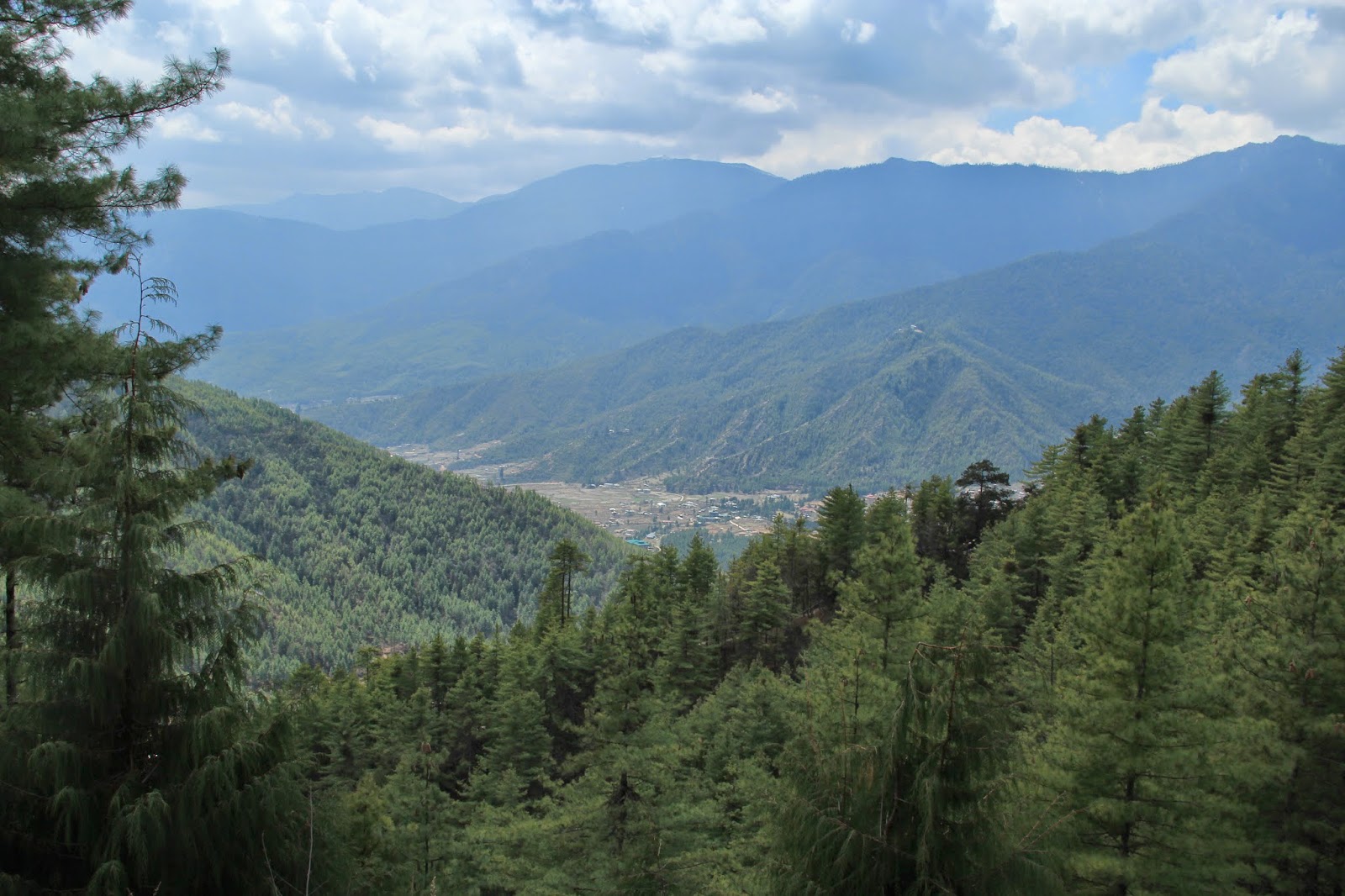
View from Paro, the city with the airport, Bhutan

Is it possible for a country to be unhappy if this is what it looks like?

Gate to the cafetaria, Tiger's Nest

Even the tramps have THE life here
Budhha Statue: Look at the trees for some perspective
The view of the Tiger's Nest monastery from the Cafetaria

This could be an Airtel ad


Have some more beauty

Photo Credit: Mehul Gupta


Saturday, 19 April 2014

Bhutan Diaries

·         The moment I truly understood Gross National Happiness was about 30 minutes after I landed in India, when a DTC conductor snapped at me for enquiring whether the bus would go to the domestic terminal. That was before a middle-aged aunty disapproved of my luggage, then proceeded to invade my personal space in return.

(This was all aboard a ‘shuttle’ between the two terminals of the Delhi airport. But really, the domestic terminal is one of the bus-stops on the way of the bus to “Kashmere Gate Kashmere Gate”, in the words of the afore-mentioned conductor.)

·         When asked about the meaning of GNH by an Indian, a young bank employee in Bhutan replied that it meant not having to drive in traffic for an hour and a half to reach office.

·         Who wants to drive when the best part of the day is a 30 minute leisurely paced walk back from office to the hotel.

·         Happy country or not, I can crib anywhere. Even seated on a rock at the riverside with the river making the most pleasant gurgling sounds and a view over-looking the mountains.

·         A rock on the riverside with a view over-looking the mountains is fertile territory for philosophising.

·         My thoughts while making the hardest trek of my life: the journey is more important than the goal, the journey is more…huff…aah this is killing me.

My thoughts after reaching the destination of the trek: The goal’s more beautiful when the journey is tough.

(Now to just apply this deep philosophical insight to real life).

·         Snow-capped mountains, from the vantage point of a giant Buddha statue can be a heart-breakingly beautiful sight.

·         I never thought I would use the phrase ‘heartbreakingly beautiful’ in all seriousness.

·         All the scenic beauty and peace can go take a hike if there is no internet. Or tv.

·         I saw an episode of Savdhaan India in Bhutan. I had never seen the show before.

·         Imtiaz Ali should set his next film in Bhutan. It should be a love-story between an Indian girl and Bhutanese boy. The girl will be an employee of an evil donor agency looking to economically cripple the country (though the girl doesn’t know that) and a Bhutanese government servant who is set to expose its agenda. Lots of possibilities of conflict and love. (Call me Imtiaz, the script is all ready in my head).

·         Bande hai hum from Dhoom 3 is my new anthem.

·         Bollywood’s more popular than I thought, and the adulation is not just limited to the Salman Khans and the Katrina Kaifs. While I filled in my immigration form, my Bhutanese co-passenger on board the flight to Paro peeked in, then exclaimed in recognition. Was I related to Mithun, she asked.
I wasn’t related to her current favourites either.  Salman Khan and Katrina Kaif.

·         I am more experimental with my food than I imagined. My third favourite vegetarian dish (after rajma-chawal and jhinge aloo posto) is now a dish comprising of green chillies cooked in cheese. Ema datsi, the national dish of Bhutan.

·         I am far less experimental with my drink. I asked for ice tea at my hotel. The waitress tried to fob off a packaged version. I refused to drink that. She relented and made the ice-tea for me, the traditional way. It was the closest thing to the JP Ice tea I have ever had, only 11 times as expensive.

·         The samosa and pyaji available in Bhutan can give tough competition to the best in C R Park’s Market 2.

·         Veg momos can be great too. Who would have imagined?

·         A scone is a less sweet, less nice version of goja.

·         Bhutan has the fanciest taxi of the sub-continent.

·         Bhutan also has the most talkative taxi-driver of the sub-continent.

·         Dogs like Kurkure.

·         Thimphu has a very cool book-store called Junction. It’s what Oxford used to be before they started playing loud music and hosting ridiculous events. Junction has its own dogs who will leave you alone as long as you don’t step on them. Guess what I bought from there?

Dumb Witness. Poirot.


Saturday, 29 June 2013

Travelpost: Bhubaneswar and Puri


 22 June 2013. 5:15 am. Kolkata. In front of sister’s apartment building.
“Will you come down today, at all?” I bark into the phone.
I hear sister suppress a giggle on the other side.
“Yes, 5 minutes e aaschi”, she says.
I repeat this to mother. She looks worriedly at the taxi driver.
“We will reach Howrah in time, won’t we?” she asks, seeking reassurance.
“What time is your train?”
“6. Dhouli Express”, father answers.
The driver looks into his watch, then sees our expressions. With noticeable relish, he says, “Can’t say for sure”.
I forgive him instantly. If I had been called at 4:30 in the morning and made to wait for 45 minutes subsequently, I would have said something to similar effect.

22 June 2013. 7:00 am. On board the Dhouli Express, making its way to Bhubaneswar.
“Breakfast khaben?”the Odiya train conductor asks in Bengali.
Parents opt for vegetarian fare. Sister wants an omelette. She eggs brother-in-law and me to choose chicken cutlets.
Apparently one can go wrong with chicken, we realise within the next half-hour.

22 June 2013. 6:00 pm. Bhubaneswar. In front of the Lingaraj Temple.
Sister screws up at her nose at the stench. Brother-in-law screws up his nose at the idea of visiting a temple.
She leaves him to guard our shoes outside while we make a whirlwind tour of the complex. It’s beautiful, but the floor hasn’t been maintained well. So walking bare feet is a pain, quite literally. The door of the main deity is scheduled to open shortly, but we don’t stay.

22 June 2013. 10 pm. Bhubaneswar. At the guest house.
Mother is pointing at the wall, her eyes glassy with fear.
She has just spotted a mouse in the room.
The care-taker of the guest house says unconcernedly, “kaatega nahi”.
He is lying, we realise a while later, as one of the other guests recounts stories of cable wires being destroyed and human ears being nibbled.
“There are only temples to see here in Bhubaneswar,” brother-in-law chimes in helpfully.
Our minds are made. We are going to Puri. (Famous for its Jagganath Temple, but nobody points that out).

23 June 2013. 9 am. Bhubaneswar. At the guest house.
Father is pacing the length of the room. He glances at his watch periodically, checking it with the wall clock in the room at the same time.
The car is at the gate. It’s supposed to take us to Chilka Lake first. Then drop us to a hotel in Puri.
Mother and I have finished packing.
There is no word from sister’s room yet.
Mother mutters under her breath. I think she is vowing to never plan a trip with her elder daughter again.

23 June 2013. 12:30 pm. Chilka Lake. On the steamer, on our way to a Kali Bari in the middle of the lake.
Brother-in-law is bounding about the boat, using windows to enter and exit at will. Mother watches him with a terrorised expression on her face. She glances at me sideways. I smile at her. I can see she is glad she has two daughters. Her gladness evaporates soon enough, as sister and I decide to climb up on the deck as well.
We have prawns and bhetki later for lunch. Odisha is the only place outside of Bengal, where the parents will allow this.

23 June. 8:00 pm. Puri. Hotel Dreamland.
“The name practically tells you that the hotel will be no good”, sister says while looking around the room in disgust.
It is a medium sized room, decorated in the style of a Bollywood film set from the 70s, I notice with considerable pleasure. Complete with a wall mirror facing the bed, and red velvet curtains. Plus the view of the sea is divine. The dogs and the cows on the beach, notwithstanding.

24 June. 2 pm. Puri. On board our mode of transportation- a battered old phatphat.
Our driver doubles up as the guide, tells us he will take us to a Gour Vihar and Mohuna.
He also informs us that the Jagganath Temple is closed for 15 days, a yearly period when the God is ‘sick’ and sees no visitors. Nobody says anything, but the glee in the atmosphere is palpable.
On the other hand, Gour Vihar, to nobody’s surprise turns out to be a temple-cum-ashram, dedicated to Shri Chaitanya Deva, a disciple of Lord Krishna. Father mumbles something about him also being an avatar of the latter. Then gets thrown off by the depiction of the two of them together, as also my persistent queries of how that was possible. I look to mother for clarification, but she quickly averts my gaze.
Father turns out to be right. It wasn’t Chaitanya Dev in the depiction.
It still seems improper to me, almost narcissistic that Chaitanya was pretending to be his own disciple.
Mother whispers to me to shut up. “Everyone understands Bangla here. You don’t want to hurt anyone’s feelings”.
A very rough ride later, the phatphat stops in the middle of nowhere, and the driver points to a tree. I can see an orange coloured deity there, sitting in a tiny little shrine of its own.
“Mohuna is a temple? A tiny temple?”, brother-in-law asks, his voice straining to remain polite.
“No saab, walk up there, you will see”, the driver smiles, pointing at a slope.
We do. And remain spell-bound. If I were a better writer or simply less lazy, my fancy flowery words would let you know that it’s the most beautiful place I have seen. As the case is, you have to be satisfied with pictures, pictures that do no justice to the beauty on display.


Mohuna, the place where the Mahanadi and the Bay of Bengal converge

The entire trip is immediately deemed a success.

25 June. 10 pm. Kolkata. Grandparents’ place.
Grandmother stares at us. Her face betrays feelings of disbelief and pity at the same time.
“You couldn’t see the Jagannath temple?”, she asks aloud finally, with stress on the 'couldn’t'.
“Eeesh”, she commiserates.


Monday, 10 June 2013

Travelpost: 10 Things about Kolkata, from an Outsider's Perspective

Wikipedia enumerates the following steps to be followed in the process of doing research
·         Identification of research problem
·         Literature review
·         Specifying the purpose of research
·         Determine specific research questions or hypotheses
·         Data collection
·         Analyzing and interpreting the data
·         Reporting and evaluating research
Since I don't think I have the right orientation for this kind of work anyway (I am after all quoting Wikipedia), I will dispense with any pretence at a scientific enquiry. The following are my (sometimes biased) observations about Kolkata, formed through a lifetime of summer holidays I have spent here.
v  Kolkata is only a different type of hot. While Delhi’s heat will announce itself to you, with its nasty sun and the infamous loo, Kolkata’s will sneak up from behind and take you by surprise. The sweet wind that appears to be blowing outside, when you are at home will conspire to stand still as soon as you step out, and reduce you to a sweaty mess, in the first ten steps you take.
v  Getting work done here, especially in the first attempt, is a near impossibility. This would normally be fine, except when you are working according to Delhi deadlines.
v  One of the reasons for the above is the interminable lunch hour(s) that shops here follow. Long enough, to ensure that the worst administration departments of the best Delhi University colleges are a distant second.
           Last week I needed to use the cyber cafe here for a few printouts. Admittedly, I reached the market at 3:30, and was justly informed that I would have to wait for the shop to open. At 4, I spied the owner entering the market, a man I had known since I was 10 (having overheard him planning a ganja party over the phone, but I digress). When I limped after him to ask when he would open, he waved me away, saying ‘later’.
 I went again to the cafe at 4:25, thinking it was sufficiently ‘later’. He had the shop open and most of the computers on too. I smiled. He grunted and said ‘Come at 4:30’.
I showed him my watch, pleading there were only 5 minutes for that.
He turned around now facing me properly for the first time. He seemed to hesitate first, then something in my eager, pleading face helped him make up his mind. Taking a deep breath, he leaned forward and said, “4:30 means 5.”
An important life lesson learnt.
v  People are unnaturally chatty here. Especially in comparison to Delhi, where even the Metro keeps reminding you to not befriend any strangers (lest you get drugged and raped/ drugged and looted/ not drugged but still sweet-talked into parting with all your money etc.).
The chattiness can sometimes be nice, when you receive a nugget of absolutely irrelevant information. When it takes the form of unsolicited advice, then it can be a little infuriating.
v  Kolkata is second to known, when it comes to political awareness among its citizens. Domestic help/ guardsmen/ vendors etc. take en-masse leave during election season to go back to their native villages to cast their vote. A few years back, my three year old cousin examined my fingernails and disappointedly surmised that I hadn’t voted.
v  Children are very precocious here. Okay no, children are precocious everywhere.
v  Kolkata kids (students) are very hard working. At the tender age of nine when their Delhi counterparts don’t know what an essay is, these kids are mugging up dozens of them every week. When a Delhi kid has difficulty pronouncing participle , the Kolkata kid is far past the stage where he/she wrote the participles of 10 verbs every day. The Kolkata kid, as soon as he/ she enters class eight, is reminded of the impending Board examinations. Life outside school ceases in class 9. That’s when they start going for two tuitions for every subject. And if you have a cousin in Kolkata who is in tenth standard, the same year as you, then besides all the studying/mugging/ tuition-taking, he/she will also make life very miserable for you.
v  People (adults) have a lot of time on their hands. Markets, have dedicated spaces here, where people congregate to chat, have tea, while away their afternoons/ evenings. In fact no time is sacrosanct.
Today, at 12:15 pm, I saw two youngish-men, dressed in formals, at the neighbourhood park, SWINGING. Yes, on those contraptions designed for kids-which they no longer need, given how busy they are, studying or just being precocious.
Mind you, these were bhodrolok, not the unemployed youth who loll about in Delhi’s Central Park.
v  Scatological humour is big here. This is tied in to the general pre-occupation about one’s digestive systems and food.
v  Food’s everywhere here. And relatively cheap.


Friday, 7 December 2012

Travelpost: Lucknow

 To get a pre-paid auto at the Lucknow Railway station, passengers have to catch hold of an available auto, then coax the driver to take them to their desired destination. A man wearing a denim jacket and matching pants roams around brandishing a stick, performing the duties of the constabulary. There is no indication of him being there in official capacity. However, his prodding succeeds in convincing an autowallah, who we found after waiting for at least 20 minutes, to take us to our guesthouse in Aliganj.  

It is a thirty-minute ride, during which the auto stops four times. Twice to ask for directions, once for the driver to answer his mobile, and once for him to buy bananas that he eats while my parents worriedly ask around for directions. Never, at a traffic signal. There are none on the way. Vehicles seem to find a way out of the mess at the various intersections on their own, spewing out in all directions and on all sides. Apart from that, the ride is eventless.

The Guesthouse Campus

 
The guesthouse is situated within a residential complex for Government scientists. I have lived in one of those in Delhi, and all the memories make me smile. The campus is large and clean. I see no kids around though, a huge difference from the Delhi campus. The guesthouse is really a wing of the scientists’ hostel, with the rooms being more comfortably furnished than those of the latter. The caretaker is a mild mannered elderly man. I can almost hear the question mark in his voice after he tells us his own name. He informs us that there is no lunch available and that we should go to the restaurant nearby if we want any. My father grimaces at the signboard announcing the restaurant to be “100 per cent vegetarian”. We eat in silence.


We step out next morning for the usual round of sight-seeing. I am adamant that I want to see the city like a local. My dad agrees by refusing to book a cab. It wasn’t exactly what I meant, but I take it well since I enjoy using public transport. My mother grumbles. I do too, exactly half an hour later, when I realise that Lucknow has no legitimate public transport system. An exorbitantly priced auto ride later, we are at the gate of the Bada Imambada. Immediately touts surround us promising to show us the Imambada and other famous sights around the area in a horse pulled tonga for all of fifty rupees. We hop on.

Our first stop is the Chikan factory in the area. We realise we have been heckled, and that the tonga wala’s only aim is to earn a commission from the factory on our purchases. As a matter of principle, my parents refuse to buy anything from there. The tonga wala is all politeness even after the debacle, driving us to see the Chota imambada (the only one in the tonga wala’s itinerary). There is a clock tower on the way, whose photos I hastily click on my phone camera.

Clock Tower, Lucknow
At the Chota Imambada, we are met by a lone gatekeeper, who for thirty rupees also doubles up as the resident guide. My mother tells him how the people of Lucknow all seem to be very well spoken. Accordingly, he prattles off the history of the Shahi Hammam (the Royal Bath) in impeccable Urdu. We struggle to comprehend. The camera conks off and I worry about it, while he directs my parents to the royal lavatory and goes on to explain the mechanics of the 300 year old system. My mother is disgusted, my father impressed. The imambada itself houses a lot of chandeliers sourced from various parts of the world. We look around for some time before our tonga wala comes in to tell us it’s time. He drops us off at the gate of the Bada Imambada, with the directions to get a Government approved guide inside. I am famished and refuse to see anymore.


Shahi Hamam, Chota Imambada Complex
We go to Hazratganj, the posh market in Lucknow. It reminds us of C.P, only dirtier. Even when compared to the mess C.P currently is in. There is no room to complain about the food though. It is every bit as good as we had heard. We eat in silence again. A more satisfied silence than before.

Dad books a car for the next morning. The driver calls us half an hour after we are scheduled to leave, to tell us he is late. We cancel the booking and resignedly hail another overcharging auto to make our way to the Bada Imambada. The hecklers of the previous day recognise us and keep their distance.

Gateway to the Bada Imambada

The government-approved guide ignores the chart enumerating the government-approved guide rates. We point it out. He hastily revises the prices he quoted. Then hurries us through the Imambada building when we agree. He cackles impatiently as I stop to click photos. He tells us that the Imambada was built by Nawab Asaf-ud-Daula as a project to generate employment for the poor during drought years. They would build during the day, and the Nawab would order his men to break the structures down by night. This went on for 11 years before the Nawab stopped his night-time destruction. It took another 11 years to build the structure.


Bada Imambada

The famous Bhool Bhulaiya (the Labyrinth) stands next to the Imambada building. It has 1024 ways, out of which only one is correct. Some of the routes can take you to Agra, Faizabad and as far as Delhi. Inside, the guide makes us stand with our ears pressed to the wall. He goes further down the corridor and softly says our name, his mouth facing the wall. We can hear him clearly. The guide puns about  “deewaro ke bhi kaan hote hain”. The saying might have originated there, I couldn’t tell you for sure. The view from the terrace is beautiful. The guide can’t tell us the names of some of the ruins I point out. And he seems too disinterested to cook up anything. I have to be satisfied by clicking photos.

Unnamed Ruin, as seen from the terrace of the Bhool Bhulaiya

We have a late lunch at the famous Chowk area, but not before being heckled some more. The restaurant owner suggests we hurry if we want to see the Residency. We obey. The residency is a group of ruins that housed the British General during his stay at Lucknow. The museum has interesting artefacts, including shards of porcelain vessels that were excavated as early as 2000. I want to explore some more, but it is nearly closing time and the guards hover nearby, discouraging anyone from looking too carefully. There are a few portraits of the Nawabs, but I don’t bother with those. I click pictures of some of the ruins. Each proclaims itself to have been of consequence during its glory days. Either a doctor’s residence or a begum’s quarters. I do not bother with those plaques either.

Ruins in the Residency Complex


Ruins in the Residency Complex


The next afternoon, on board the Shatabdi Express, my mother rues that there was no time to see the newer parts of Lucknow, the parks that are the ex Chief Minister’s legacy. She promises to go there the next time we visit. The train pulls out of the station.